Case Study: SUNY Oneonta OpenLab
Introduction
Over the past five years, Ed Beck and his colleagues at the State University of New York at Oneonta have worked to align instructional design and open online learning with institutional strategy, navigating the practical challenges of procurement and funding along the way.
In this case study, Ed Beck shares insights into what it takes to move an open-source software solution from experiment to enterprise service. He also explores how to win the support of colleagues and secure the funding needed to build, scale, and future-proof such projects from the outset.
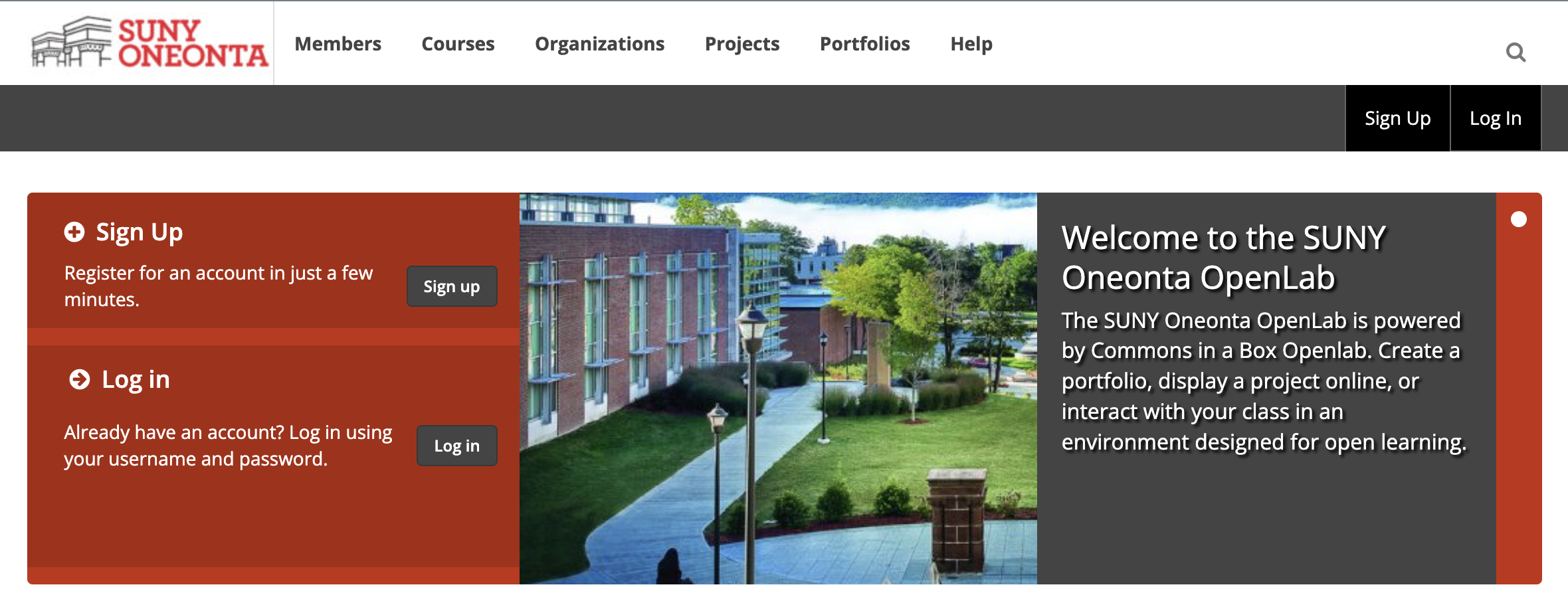
SUNY Oneonta OpenLab: can be used to create a portfolio, display a project online, or interact with your class in an environment designed for open learning.
Commons In A Box OpenLab: this is the technology that powers the SUNY Oneonta OpenLab. CBOX OpenLab is a free open-source software that provides an infrastructure that encourages discussion, collaboration, and sharing.
Domain of One’s Own (DoOO): flexible, at-scale cPanel web hosting for institutions, educators, and students.
Institutional context
This is the story of how a proof-of-concept experiment in open software became a scaled-up service that supports high-impact teaching and experiential learning for the faculty and students at Oneonta. From the outset, the goal was to support a series of connected learning experiences over time, focused on experiential learning and capturing learning outcomes, which led Ed and the team to explore portfolio systems:
“We started to consider how to collect and safely store this information across all these different opportunities and, importantly, to enable students to not only keep the portfolio throughout their time with us but also to take with them when they leave. Amongst the solutions we looked at was Commons In A Box OpenLab. We were drawn to OpenLab's flexible nature, that it could be used by multi-author organization and projects, or used to create individual portfolios. We liked how the set up future proofed our efforts."
From experiment to scaled-up service
From a technical perspective, it took several years to move from an experiment on Shared Hosting on SUNY’s shared Domain of One’s Own to a more robust service using the scalable infrastructure of Reclaim Cloud and finally a Managed Hosting server. Here is a summary of the main stages as the project developed:
Stage 1: Experimenting with Commons In A Box OpenLab
The key initially was to start small and to explore the functionality and applications of OpenLab built on Comons in a Box.* Ed explains:
"I think the best way to engage with open source is to use products for their intended purpose."
He goes on to explain that the team evaluated OpenLab for portfolios because it's designed to be used in Higher Ed, has privacy control to help align with institutional policies, and could be linked to the institutional priority of experiential learning.
Stage 2: From proof of concept to individual use cases
Looking back on the development journey, we asked Ed to reflect on how he and his team made the case for the value of environments like Domain of One’s Own or Reclaim Cloud at the institutional level. Ed explains:
“We have so many projects that need to be on the web, have a website, a web tool. We have to have a solution with which we can quickly spin up and enable a site for projects, in an already supported environment and in which, when needed, educators can get help. That's the benefit.”
In the case of this project, the number of sites was quickly multiplying.
Stage 3: Moving to enterprise service
As the number of individual use cases moved into the hundreds, the team identified a clear need to scale up the service as the logistical next step. Ed reflects on this process:
“Open Source is enterprise software. Training, infrastructure, outreach, support and so on, that is all part of that step to move from hobby-ist to enterprise. Part of the planning for growth of OpenLab was thoughtful accounting for what could be done internally by the team at SUNY Oneonta and where the project would be best served with managed services from Reclaim Hosting."
Impact within the institution and beyond
The team at SUNY Oneonta consider themselves strong advocates for the use and utilization of open source software. They prioritize creating the best possible experience for their students at the same time as being good stewards of state funds. Closely aligned to the institutional strategy, the biggest impact of the successful OpenLab service can be felt within the institution, for students and faculty:
“We wanted to make sure that our students have the best materials and solutions that they need. We believe the open source solution is the best we can offer, the best fit for the teaching we excel at. We believe that what we are doing is the best option for our students, and the best use of the state funds that we have.”
A further impact of operating the service is building institutional capacity. There is close collaboration with the CBOX OpenLab developer and the team at Reclaim, enabling Ed and his colleagues to build important skills and invest in training, increasing institutional capacity, which in turn helps to retain the talent.
First hand knowledge and practical insights get shared widely beyond the institution, for example at events such as last year’s joint SUNY and CUNY conference: Public Good U: Strengthening the Case for Public Higher Education. As well as creating a positive impact within the institution, the work of Ed and his colleagues in the SUNY team directly contributes to the public good of the open source community in Higher Education and beyond.
*Both outgrowths of the consistent work with open tools and platforms the City University of New York (CUNY) has pioneered for near on two decades to connect people.
Thanks and acknowledgements
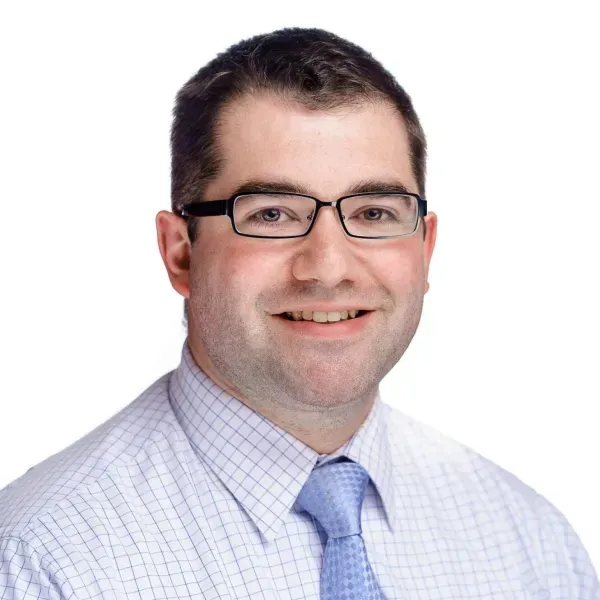
We are grateful to Ed Beck, Instructional Designer, Open and Online Learning Specialist, part of the Pedagogy, Innovation and Technology Support Team at SUNY Oneonta. Ed is also president of WPCampus, the professional organization for WordPress in Higher Ed.
The interview was led by Reclaim’s Co-Founder, Jim Groom, and the case study was written by Dr Maren Deepwell, consultant at Reclaim Hosting.